.webp)








Weaver of Pharloom: A Deep Dive into High-Level Mechanics and Mastery in Silksong
Hollow Knight: Silksong represents a seismic shift in the metroidvania landscape, moving away from the deliberate, defensive pacing of its predecessor toward a kinetic, predatory system of "Silk and Song." As Hornet, the Princess-Protector of Hallownest, players are thrust into the soaring kingdom of Pharloom. To survive this ascent, one must master the intricate physics of the Needle and the complex resource management of the Silk spool. Success in Silksong is not merely about pattern recognition; it is about maintaining momentum in a world designed to ground you.
The core philosophy of Silksong is "aggression as defense." While the original Knight sought windows of safety to recover, Hornet creates her own safety through offensive pressure. This guide moves past basic navigation to explore the technical nuances of frame-data, tool-smithing, and the environmental puzzles that define Pharloom’s verticality. Whether you are navigating the scorching heat of the Bonebottom or the mechanical complexities of the Clockwork Spire, these strategies will provide the competitive edge needed to conquer the pilgrimage.
1. The Physics of Momentum: Mastering Hornet’s Vertical Mobility
Hornet’s movement is fundamentally different from the Knight’s due to her height and weight physics. Her dash possesses a slight "arc" that can be exploited for horizontal distance if triggered at the apex of a jump. Unlike the Knight, who required a dash-reset via the ground or a pogo, Hornet’s "Ledge Grab" is a native ability that resets her aerial options. High-level players use "Ledge-Canceling"—jumping the exact frame Hornet touches a ledge—to preserve upward velocity, allowing for rapid-fire scaling of the Gilded Citadel.
Furthermore, the "Needle Throw" is not just an offensive tool but a mobility anchor. In specific aerial encounters, throwing the needle into a wall or a heavy enemy allows Hornet to "Zip," pulling herself toward the target. This creates a loop of aerial dominance where you never actually touch the floor. Mastering the "Diagonal Pounce" is essential; by attacking downward, Hornet bounces higher than a standard jump, effectively using enemies as platforms to bypass environmental hazards like thorns or molten silk.
2. The Silk-Soul Economy: Strategic Binding and Burst Healing
The "Bind" mechanic is the most significant mechanical departure from the original game. Instead of focusing SOUL to heal one mask at a time, Hornet consumes a full spool of Silk to heal three masks near-instantaneously. This "Burst Healing" changes the rhythm of boss fights. Because Bind heals a set amount and empties the entire bar, healing while missing only one mask is a catastrophic waste of resources. The optimal strategy is "Danger-Zone Fishing," where you stay at two masks, continue attacking to fill your spool, and only Bind when at the brink of death.
Silk is also the primary resource for your Tools. This creates a constant tactical tension: do you spend your Silk on a "Sawfly" to deal massive damage, or save it for an emergency Bind? Veteran players often prioritize "Tool-Pressure." By using Silk to end a fight faster, you minimize the number of times you need to heal. This proactive resource management is the key to surviving Pharloom’s gauntlets, where enemies attack in swarms and "waiting for an opening" usually leads to being overwhelmed.
3. Tool-Smithing and the Crest System: Architectural Customization
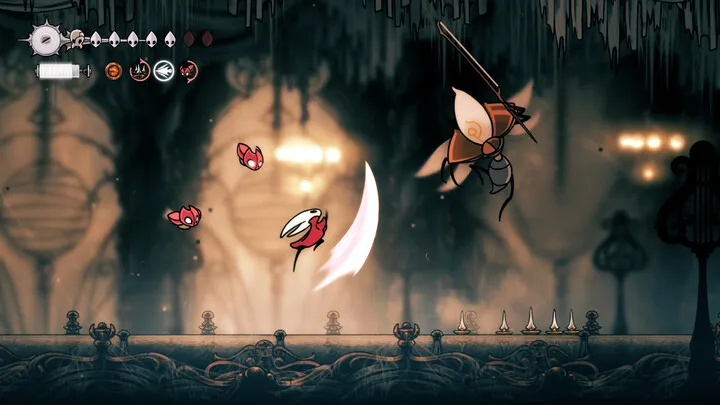
Silksong replaces the Charm system with Crests, which act as the "skeleton" of your build. Each Crest has a specific number of slots and a unique configuration (Red, Blue, and Yellow slots). Tools can only be equipped if their type matches the slot color. For instance, the "Wanderer’s Crest" favors utility and exploration tools, while the "Warrior’s Crest" is built for high-damage projectiles. Understanding the "Synergy Bonus" of your Crest is vital; some Crests provide hidden buffs, like reduced Silk cost for tools, if all slots of a certain color are filled.
Primary Tool Categories
- Red (Attack): High-impact tools like the Pinner or Stinger that focus on direct damage and posture breaking.
- Blue (Utility): Tools like the Silk-Bell that provide temporary shields or environmental interactions.
- Yellow (Tactical): Traps, such as the Caltrops or Tripwires, designed to control the battlefield.
4. The Crafting Loop: Shell Shards and Rosary String Optimization
Currency in Silksong is bifurcated into Rosaries and Shell Shards. Rosaries are for trading, while Shell Shards are the lifeblood of your arsenal. Every time you rest at a bench, your tools are "replenished," but their maximum durability is tied to your crafting level. To optimize your progression, you should prioritize "Rosary Stringing." By paying a small fee to a banker to string your loose beads, you prevent them from being lost upon death, a crucial safeguard in high-difficulty areas like the Deep Docks.
When visiting the Forge, do not spread your Shell Shards thin. It is better to have one "Ascended" tool—such as the Tier 3 Sawfly—than five basic tools. Ascended tools often gain new properties, such as a longer flight path or a "Silk-Bleed" effect that generates Silk for Hornet upon impact. This creates an "Infinite Loop" where using a tool helps you generate the resource required to use it again, effectively turning Hornet into a self-sustaining combat engine.
5. Parrying and the "Counter-Riposte" Mechanic
Unlike the original game’s simple "pogo" mechanic, Silksong introduces a dedicated parry window. If Hornet attacks at the exact moment an enemy strike lands, she enters a "Counter-Riposte" state. For a few frames, time slows down, and Hornet can execute a follow-up dash-attack that deals triple damage and ignores the enemy's armor. This is the only way to effectively damage "Heavy-Plate" enemies found in the mechanical sectors of Pharloom.
Parry Timing Tiers
- Early Parry: Results in a "Clink" where both parties take no damage but are pushed back.
- Perfect Parry: Triggers the Counter-Riposte and grants a 10% Silk refill.
- Late Parry: Hornet takes damage, but the enemy is slightly staggered.
6. Environmental Puzzles: Decoding the Song of Pharloom
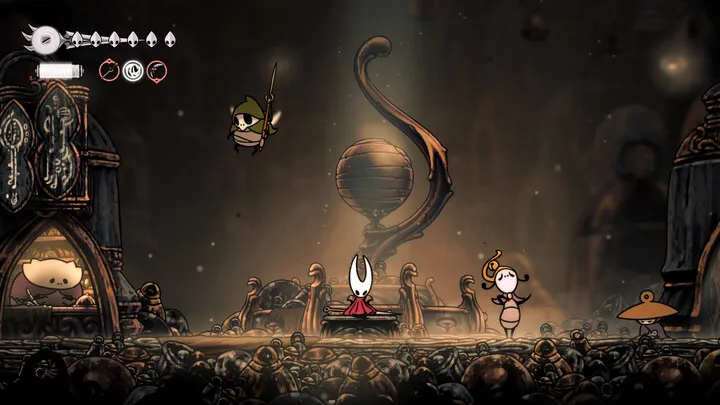
Pharloom is a kingdom governed by sound. Many of the "Gated" areas in Silksong are not blocked by physical keys, but by "Sonic Locks." Hornet must collect specific "Song Fragments" scattered throughout the world. When these fragments are played near ancient Bells, they trigger environmental changes, such as shifting gravity or revealing hidden Silk-bridges. Mastering these puzzles requires a keen ear for the background music; often, the melody of the area contains the rhythm needed to solve the local puzzle.
The "Belfry Challenges" are the peak of this mechanic. These are time-trial platforming sections where you must strike bells in a specific order to keep a door open. To succeed, you must combine your "Silk-Sprint" with precise "Needle-Grapples." If you miss a single beat, the door closes, resetting the challenge. These areas usually reward you with "Silk-Spools," which permanently increase your maximum Silk capacity, making them mandatory for late-game builds.
7. Boss Mastery: The Princess vs. The Predators
Bosses in Silksong are designed to counter the Knight’s old "stay in the corner" strategies. Predators like Lacey or the Steel Assassin are highly mobile and will actively chase Hornet into the air. The secret to defeating these bosses is "Aggro-Breaking." By using a Tool like the Smoke-Bomb, you can force the boss to lose track of Hornet for two seconds, providing a window to Bind or set up a Tripwire.
During multi-phase fights, pay attention to the boss’s "Silk Meter." Just like Hornet, bosses in Pharloom can be "exhausted." Once their meter is depleted, they enter a "Stagger State" where they take increased damage from all sources. This is the time to unleash your "Glow-Tools," which are high-cost, high-damage abilities that consume your entire Silk bar but can end a phase instantly.
8. The Quest System: Maneuvering the Pharloom Hierarchy
Unlike the cryptic NPC interactions of Hallownest, Silksong features a robust "Quest Board" system. These quests are categorized by "Hunt," "Gather," and "Wayfarer." Completing these is not just for flavor; they are the primary source of "Rosary Strings" and "Crest Expanders." In particular, the "Hunt" quests provide unique monster parts that are required to craft "Organic Tools," which often have homing properties or poison effects.
Strategic questing involves stacking objectives. If a "Gather" quest requires you to visit the Coral Forest, check the board for "Hunt" quests in that same area. By overlapping your goals, you minimize the need for backtracking, which is especially important in Silksong because the "Fast Travel" system—the Silk-Snail—is rarer than the Stags of the previous kingdom.
9. Submerged Combat: Managing the "Drowned" Debuff
Certain areas of Pharloom are flooded with "Melodic Water," which introduces a buoyancy mechanic. In these zones, Hornet’s jump height is doubled, but her "Lure Speed" (the time it takes to wind up an attack) is significantly slowed. This introduces the "Drowned" debuff, where staying submerged for too long reduces your Silk generation. To combat this, you must equip the "Gill-Crest," which converts the buoyancy into a dash-speed bonus.
Underwater combat relies heavily on "Projectile Tools." Since Hornet’s Needle swings are sluggish, using the "Pinner" or "Sea-Needle" allows you to strike from a distance without engaging the slowed-down melee animations. Furthermore, "Bubble-Bouncing" off environmental vents is the only way to reach the "Submerged Sanctums," which house the most powerful Blue-tier tools in the game.
10. End-Game Optimization: The Path to the Citadel Peak
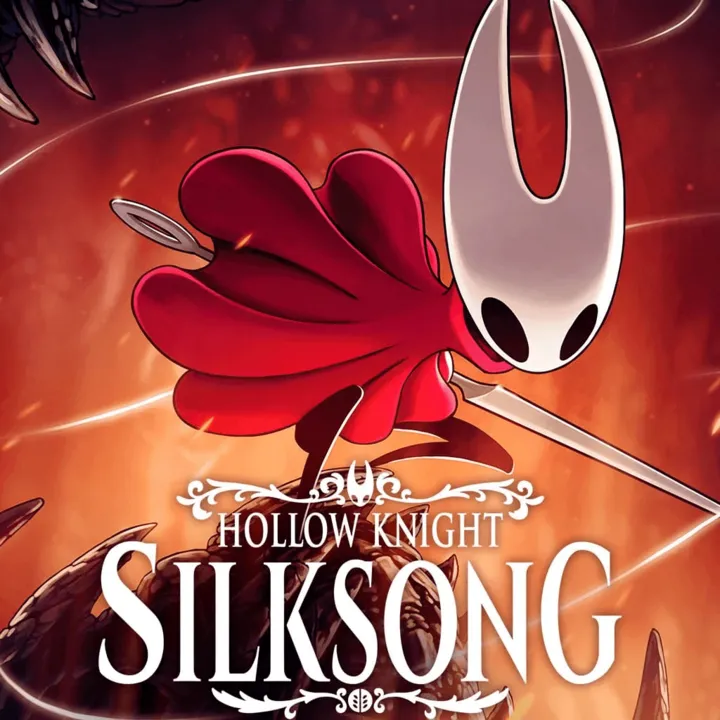
The final ascent to the Gilded Citadel is a test of everything you have learned. The enemies here utilize "Void-Silk," which can disable your Tools if you are hit. To counter this, your end-game build should focus on "High-Resilience" Crests that provide immunity to status effects. The "Bell-Ringer" build, focusing on AOE (Area of Effect) damage and high Silk-regen, is currently the most effective for clearing the Citadel’s final gauntlets.
At the peak, your "Movement Loop" must be flawless. The final platforming sections require the use of "Silk-Tethering," where you attach a line to a point and swing to gain momentum. This technique, while difficult to master, allows Hornet to clear gaps that would be impossible with a standard dash. Mastery of the Tether is what separates those who simply finish the game from those who truly conquer the kingdom of Pharloom.
Conclusion
Hollow Knight: Silksong is a masterclass in evolving a formula without losing its soul. By shifting the focus to high-speed momentum, complex tool-crafting, and proactive healing, Team Cherry has created a world that feels both familiar and entirely alien. Mastery of the Needle requires patience, but more importantly, it requires the courage to stay in the air, to press the attack, and to weave through the song of Pharloom with lethal grace.