.webp) gamecliqs.com
gamecliqs.comStacklands Tips & Guide: Essential Strategies for Card Management, Village Building, and Survival
Stacklands is a unique village-building strategy game that turns familiar survival and management mechanics into a card-based experience. Instead of controlling individual characters through a traditional map, you manage your entire settlement by stacking cards together. Villagers gather resources, buildings process materials, food keeps your population alive, and carefully combined cards unlock new possibilities.
The game looks simple at first, but its systems quickly become more demanding. Every card occupies space, every villager needs food, and every new building requires resources that must be gathered or produced efficiently. As your settlement expands, managing these systems becomes just as important as discovering new recipes.
The key to success is learning how cards interact, building reliable production chains, maintaining a sustainable food supply, and preparing for increasingly dangerous encounters. This guide covers the most important Stacklands tips, from surviving your first cycle to building an efficient village and handling advanced progression.
1. Understand the Core Card-Stacking Mechanics
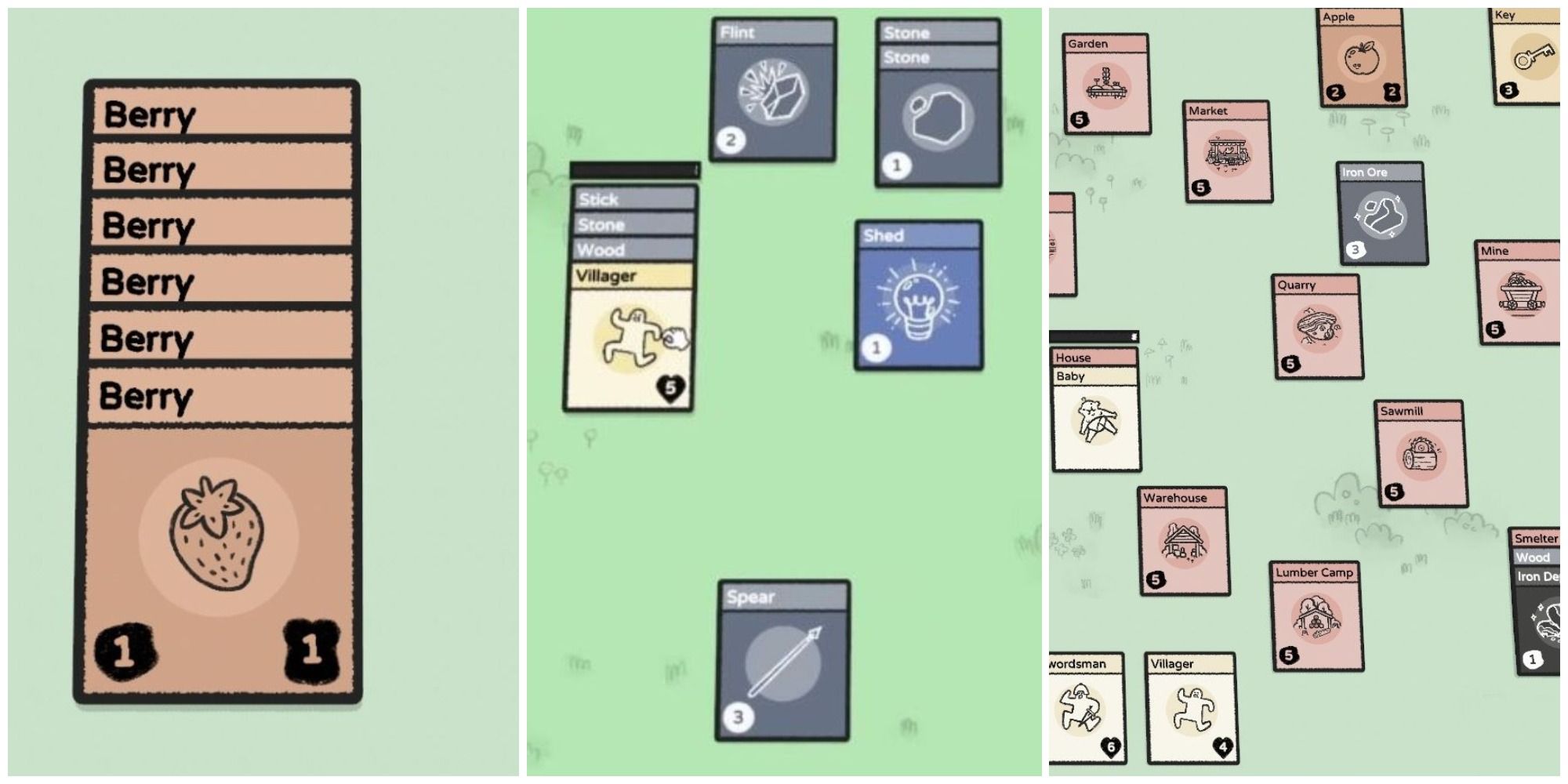
Stacklands revolves around combining cards to create resources, buildings, food, and new characters. Villagers can be placed on resource cards to gather materials, while certain combinations unlock recipes that expand your settlement.
The first lesson is that stacking cards is not just an organizational mechanic. It is the main way you interact with the world. Understanding which cards can be combined and how long different actions take will help you avoid wasting valuable time.
Learn the Basic Resource Loop
Your early settlement depends on a small number of essential resources, particularly food, wood, stone, and coins. Villagers gather resources from suitable cards, and those resources are then used to construct buildings, purchase cards, or unlock further production.
A practical opening routine is:
- Assign villagers to gather essential resources.
- Maintain enough food for the entire population.
- Collect coins and useful materials.
- Discover recipes through experimentation.
- Build structures that improve resource production.
- Keep enough free space for new cards.
The most efficient strategy is to establish a reliable resource loop before expanding aggressively.
Experiment With Card Combinations
When you discover a new resource or building, consider how it might interact with existing cards. Recipes can turn ordinary materials into more valuable items or unlock entirely new production systems.
Experimentation is useful, but do not combine every card indiscriminately. Keep track of valuable materials so you do not accidentally consume something needed for a more important objective.
2. Keep Your Villagers Fed at All Times
Food is one of the most important resources in Stacklands. Villagers consume food at the end of each moon cycle, and failing to provide enough can lead to population losses.
This makes food production a constant responsibility rather than something you can ignore once the village is established.
Calculate Your Food Requirements
Your food needs increase as your population grows. Every new villager adds another ongoing expense, so recruitment should be supported by your existing production capacity.
Before adding another villager, consider whether your settlement can reliably provide enough food for the next cycle.
A useful checklist includes:
- Count your current villagers.
- Estimate the food they will consume.
- Check your existing food supply.
- Identify the fastest available food source.
- Keep a reserve for unexpected delays.
A large population can gather more resources, but it can also consume your food stockpile surprisingly quickly.
Build Sustainable Food Production
Whenever possible, develop food sources that can reliably support your settlement instead of depending entirely on random card drops.
Farming and other production methods can become valuable as your village develops. However, production often takes time, so you should maintain a short-term food reserve while waiting for your longer-term systems to become productive.
Do not spend every available resource on buildings if doing so leaves your villagers without enough food.
3. Manage Coins and the Card Market
Coins allow you to purchase booster packs and access additional cards. These purchases can introduce villagers, resources, animals, enemies, and other opportunities that expand your settlement.
However, spending every coin immediately can leave you unable to respond to urgent needs.
Prioritize Useful Purchases
Early in a run, consider which purchase is most likely to improve your immediate survival.
Depending on your current situation, you may need more villagers, reliable food sources, resource-producing cards, or materials for construction.
Before buying a pack, ask:
- Do I have enough food for the next cycle?
- Can my current villagers gather resources efficiently?
- Am I missing a critical production card?
- Do I have enough space to manage new cards?
- Will this purchase leave me short of coins for essential needs?
The best purchase is not necessarily the most expensive one. It is the one that addresses your current bottleneck.
Avoid Spending Coins Without a Plan
Random purchases can be exciting, but they can also fill your settlement with cards that are not immediately useful.
Try to preserve some financial flexibility. If your food supply becomes unstable or an important construction opportunity appears, having coins available can make the difference between a smooth recovery and a difficult cycle.
4. Organize Cards to Prevent Chaos
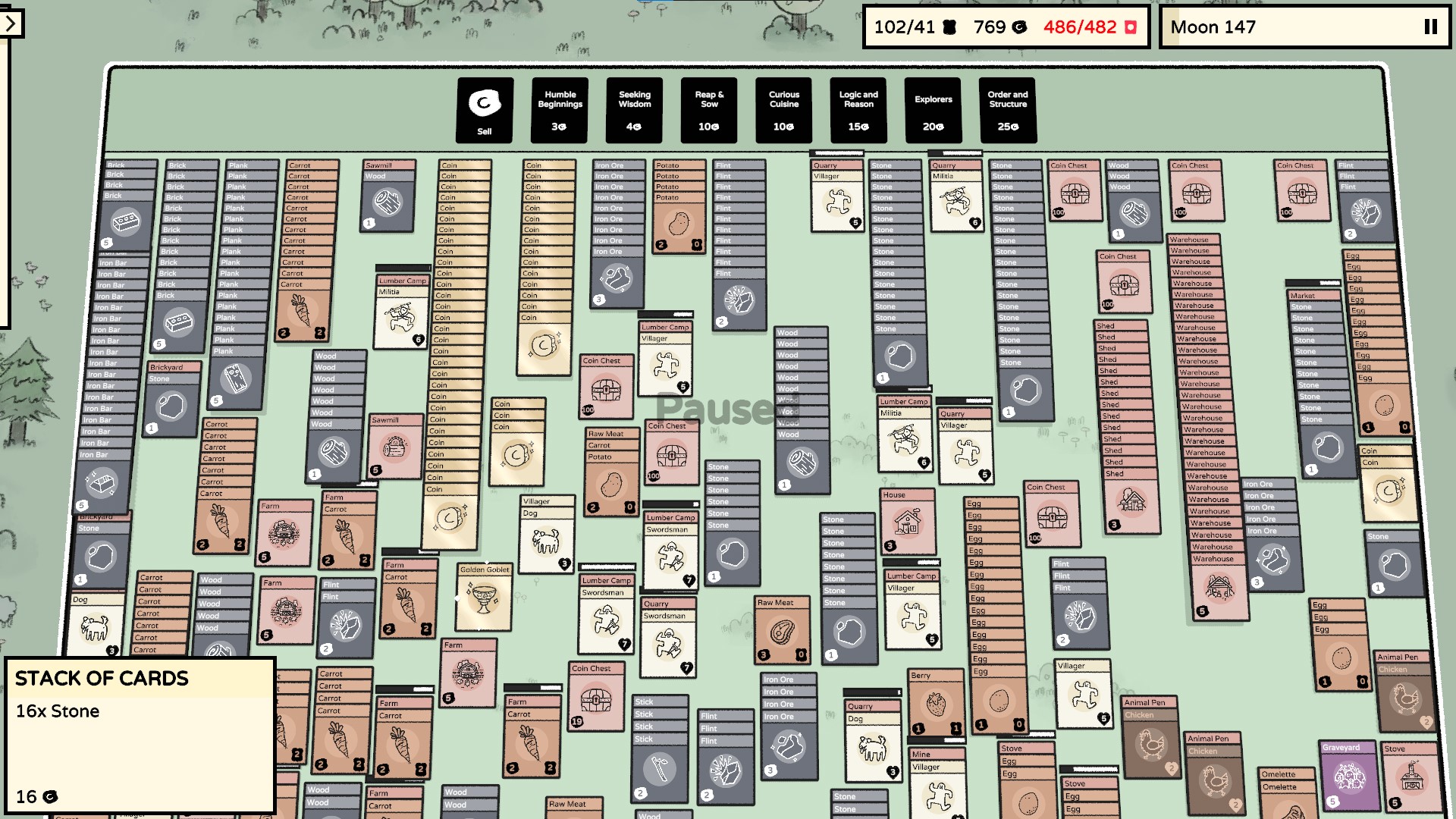
Card management becomes increasingly important as your village grows. Every new resource, building, villager, and item competes for space, and an unorganized settlement can quickly become difficult to manage.
A tidy layout is not merely cosmetic. It helps you identify available resources, monitor production, and avoid overlooking urgent problems.
Create Dedicated Areas
Group cards according to their purpose whenever possible.
Useful categories include:
- Villagers and workers
- Raw resources
- Food and farming
- Crafting materials
- Production buildings
- Animals
- Combat units
- Temporary or unneeded cards
This makes it easier to see which systems are operating and which require attention.
Keep Important Cards Accessible
Avoid burying essential resources under unrelated stacks or scattering them across the entire workspace.
Keep food near your main production area and place frequently used resources where you can quickly combine them with villagers or buildings.
As the settlement expands, reorganize whenever the current layout becomes inconvenient.
Leave Room for Expansion
New cards can appear unexpectedly through purchases, production, or encounters. If your workspace is already crowded, managing those cards becomes harder.
Reserve some open space for incoming cards and large combinations. A little planning now can prevent considerable frustration later.
5. Discover Recipes and Build Efficient Production Chains
Recipe discovery is one of the most rewarding parts of Stacklands. Combining the right cards can transform basic resources into useful equipment, buildings, food, and advanced materials.
The important thing is to understand production as a chain rather than a series of isolated recipes.
Start With Essential Buildings
Prioritize structures that help you gather, store, process, or produce resources. A building that improves a frequently used process can provide value throughout the entire run.
Before constructing something, check whether its materials are easy to replace and whether the resulting structure supports your current goals.
Think Several Steps Ahead
An advanced recipe may require a crafted component, which in turn requires multiple raw materials. If you wait until the final step to collect everything, production can become slow and frustrating.
Instead, work backward from your objective:
- Identify the item you want to create.
- Determine its required components.
- Check which components need crafting.
- Gather the necessary raw materials.
- Reserve those materials.
- Complete the production chain in a sensible order.
This method is especially helpful when several buildings depend on the same resources.
Avoid Consuming Rare Materials Accidentally
Some resources are difficult to replace or important for progression. Before using a rare material in an experimental recipe, consider whether you need it for an existing objective.
Maintain a small reserve of valuable materials whenever possible.
6. Expand Your Population Without Overloading the Economy
More villagers allow you to perform additional tasks simultaneously. One villager can gather wood while another searches for food, and others can work on construction or combat.
However, every villager also creates additional food demand. Expanding your population without improving your economy can leave the entire settlement vulnerable.
Match Population to Production
Think of villagers as workers who also require ongoing support.
Before recruiting, make sure your current food production can handle the increased demand. If your resources are limited, it may be better to improve your existing production systems first.
Assign Workers With Purpose
Do not leave villagers idle when useful work is available. Assign them to gathering, crafting, farming, or other productive activities according to your immediate needs.
At the same time, avoid starting too many resource-intensive tasks simultaneously. If all your villagers are committed to production, you may have nobody available to respond to a sudden threat.
Keep Some Flexibility
A settlement works best when it has enough capacity to handle unexpected situations.
Depending on your progress, you may want to keep a villager available for urgent gathering or combat rather than committing every worker to a long production task.
7. Prepare for Enemies and Protect Your Settlement
Stacklands includes hostile encounters that can threaten your villagers and disrupt your resource economy. Combat therefore needs to be considered before an enemy appears, not after your settlement has already suffered losses.
A village with strong production but no combat preparation can still be vulnerable.
Prepare Before Difficult Encounters
When you expect a dangerous encounter, check the strength and availability of your combat units.
Useful preparations include:
- Maintaining enough villagers to defend the settlement.
- Crafting available weapons and armor.
- Keeping food supplies stable.
- Avoiding unnecessary population risks.
- Leaving enough room to manage combat cards.
Do not assume that every villager is equally suitable for combat. Equipment and unit capabilities can make a significant difference.
Avoid Risking Your Entire Workforce
Your villagers are responsible for gathering, building, and sustaining the economy. Losing several at once can create a chain reaction in which resource production drops while food requirements become harder to meet.
Where possible, prepare a dedicated combat group rather than sending every available worker into danger.
Recover Quickly After a Fight
Once a battle ends, check your settlement immediately.
Look for missing villagers, damaged plans, interrupted production, and shortages of essential resources. Restoring food and worker capacity should generally take priority over optional construction.
8. Use Farming and Animals to Strengthen Your Economy
As your settlement develops, farming and animal-related systems can provide additional ways to obtain food and other useful resources.
These systems can reduce your dependence on short-term random drops, but they still require investment and planning.
Establish Farming at the Right Time
Farming is most useful when you can support the materials and time required to make it productive.
Do not assume that constructing a farm will solve an immediate food shortage if the production process takes time. Maintain an existing food source while your agricultural system develops.
Balance Production With Consumption
The goal is to create a sustainable supply, not simply to produce as much as possible.
If your population is small, a modest food system may be sufficient. As you recruit additional villagers, you can expand production to match demand.
Treat Animals as Part of a Larger System
Animal-related cards may provide useful resources or support specialized production. Consider how they fit into your existing economy before investing heavily in them.
A strong settlement combines multiple reliable systems rather than depending on one source of food or materials.
9. Manage Moon Cycles and Long-Term Objectives
Stacklands is structured around recurring moon cycles. At the end of each cycle, your settlement must meet its food requirements, and the game may introduce additional challenges as progression continues.
This creates a useful rhythm: gather resources, build infrastructure, prepare for threats, and check that your economy can survive the next cycle.
Prepare Before the Cycle Ends
Do not wait until the final moment to check your food supply.
Before each cycle ends, review your settlement:
- Is there enough food for everyone?
- Are essential production tasks progressing?
- Are any villagers exposed to danger?
- Do you have enough space for new cards?
- Are there unfinished tasks that should be completed first?
A short review can prevent avoidable losses.
Balance Immediate Survival and Long-Term Growth
It is tempting to spend all your resources on an ambitious building or advanced recipe. However, a project is not worthwhile if it leaves the village unable to survive the next cycle.
Protect the basic economy first, then invest your surplus into expansion.
Set One Main Goal Per Cycle
Rather than trying to complete every objective at once, choose a primary goal for each cycle.
For example, one cycle might focus on improving food production, while another focuses on gathering construction materials or unlocking a new recipe.
This approach makes progress easier to track and reduces unnecessary resource conflicts.
10. Optimize Your Settlement for Advanced Progression
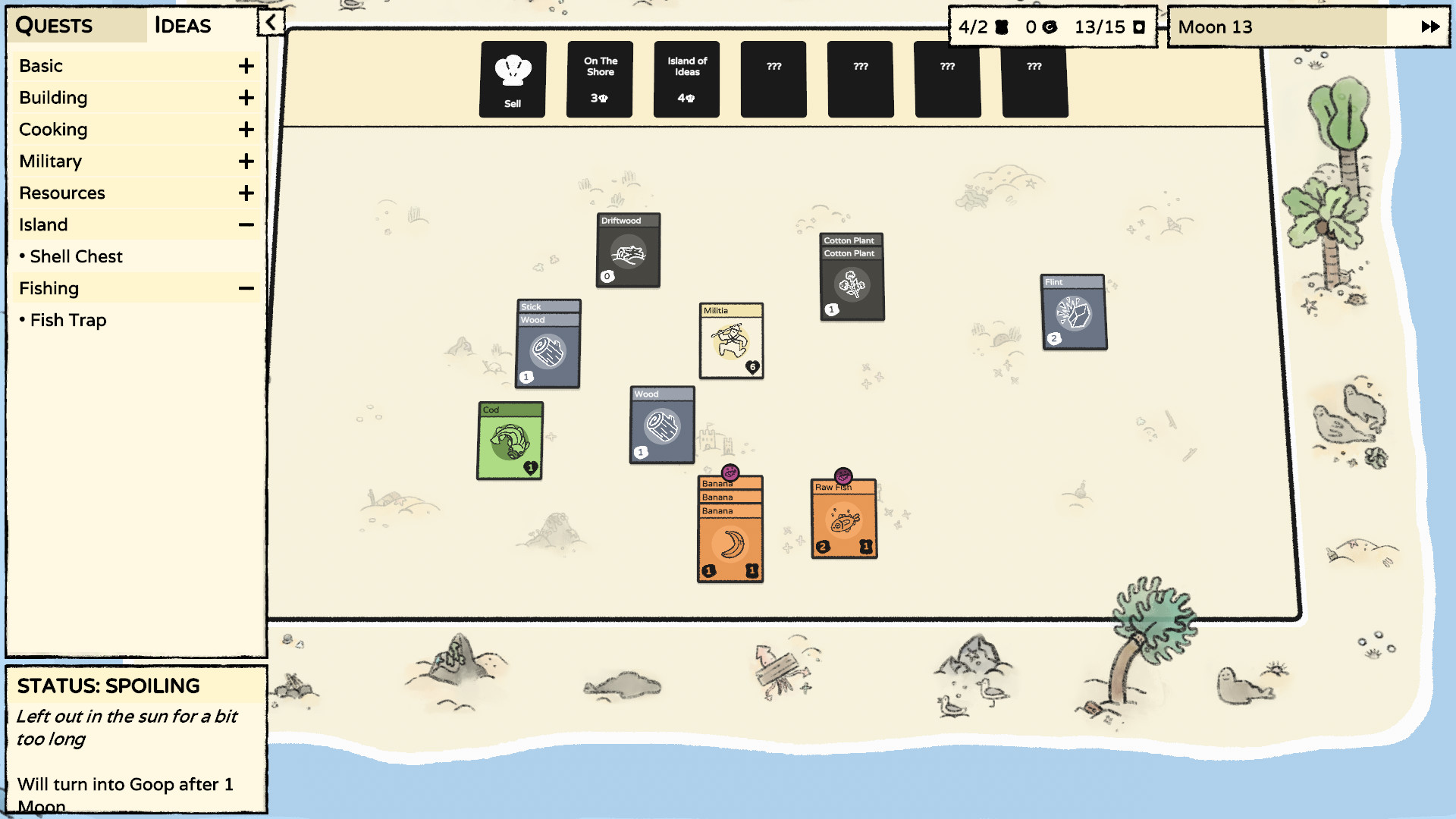
In the later stages of Stacklands, the challenge shifts from simply surviving to coordinating a much larger collection of cards and production systems.
More advanced recipes require additional resources, the population may grow, and hostile encounters can demand better preparation. Efficiency becomes increasingly important.
Identify Your Main Bottleneck
When progress slows, determine which resource or process is responsible.
If you lack food, improve food production. If construction is stalled, focus on the missing materials. If enemies are causing repeated losses, invest in combat preparation.
Do not expand every system simultaneously when only one is holding back your progress.
Keep Production and Storage Organized
As the number of cards increases, maintaining a clear layout becomes essential.
Separate raw resources from crafted components, keep frequently used materials accessible, and leave open space for new cards.
Review your production systems regularly to identify idle buildings, unnecessary duplication, or resources that are accumulating without a clear purpose.
Preserve Resources for Major Objectives
Advanced recipes can require several layers of materials. Keep track of the components needed for your next important objective before using them elsewhere.
If a resource is difficult to replace, reserve it until you are confident that your current project will not interfere with future progression.
Build a Sustainable Long-Term Routine
A reliable late-game routine should include:
- Checking food and population needs.
- Collecting finished resources.
- Assigning villagers to useful tasks.
- Maintaining combat readiness.
- Completing important recipes.
- Saving materials for major objectives.
- Preparing for the next moon cycle.
The goal is to make your settlement stable enough that you can focus on unlocking new systems rather than constantly repairing avoidable problems.
Conclusion
Stacklands combines village management, survival, crafting, and strategy into a compact card-based system. Its apparent simplicity hides a game in which every resource, villager, building, and production chain must be managed carefully.
The strongest early-game strategy is to establish a dependable food supply, gather essential resources, and spend coins on purchases that solve immediate problems. As your settlement expands, organize cards into clear groups, discover recipes methodically, and build production chains that support your long-term goals.
Population growth should always be balanced against food production, while combat preparation helps protect the workers and resources your village depends on. Before every moon cycle ends, check your supplies and make sure your settlement can handle its ongoing costs.
Most importantly, learn to identify the bottleneck that is slowing you down. Whether you need more food, additional workers, better equipment, or a missing crafting component, solving that specific problem is usually more effective than expanding every system at once.
With careful planning, organized card management, and a sustainable economy, you can transform a small group of villagers into a thriving settlement capable of handling Stacklands' increasingly demanding challenges.
Description (160 characters):
Master Stacklands with essential tips for card combinations, food production, village building, crafting, combat, resource management, and long-term survival.