.webp) gamecliqs.com
gamecliqs.comRimWorld: 10 Essential Tips for Surviving Your First Colony
Introduction

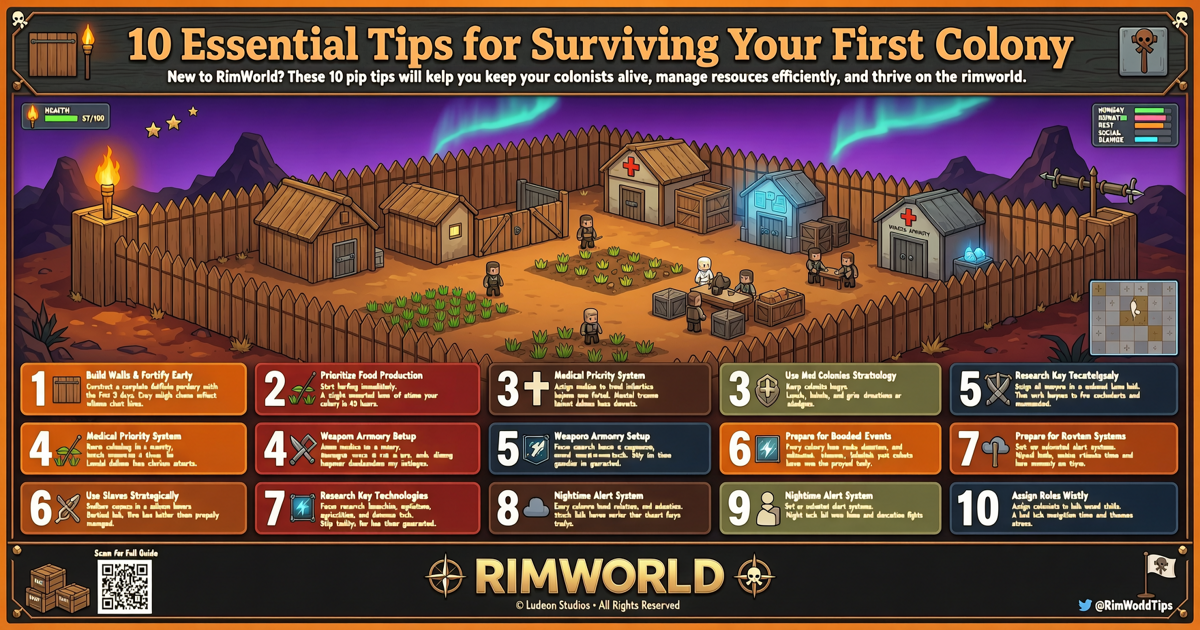
RimWorld is a colony simulation game where every decision counts. For new players, the first few hours can be brutal. But with the right strategies, you can turn your struggling settlement into a thriving base. Here are 10 essential tips to help you survive and prosper.
1. Choose Your Starting Location Wisely

The map you pick sets the difficulty. Temperate forests with year-round growing seasons are easiest. Avoid extreme deserts or ice sheets until you're experienced. Look for a spot with fertile soil, nearby stone for construction, and a small hill for defensible positions.
2. Prioritize Immediate Needs: Food and Shelter
On day one, build a simple wooden hut to shelter colonists from weather and raids. Assign a grow zone for rice or potatoes; rice grows fast but needs fertile soil. Hunt small animals like rabbits for meat, but beware of predators. A cooking bill set to 'until you have 10 meals' keeps food safe.
3. Manage Colonist Mood
Low mood leads to mental breaks. Ensure each colonist has a decent bedroom (at least 4x4), a clean dining area, and a table to eat at. Toggle 'reduce work' if a colonist is stressed. Use joy activities like horseshoes or chess tables to boost recreation.
4. Use the Work Tab Efficiently
Default priorities cause inefficiency. Manually set skills: assign one colonist to 'firefighting, patient, and basic' at priority 1, then farming, cooking, crafting lower. Avoid overlapping high priorities. Micromanage during emergencies.
5. Build Defenses Early
Don't wait for raids. Create a simple kill box: a narrow corridor with sandbags and traps leading to your base. Use stone walls (not wood) for defense. Research 'machining' to unlock turrets quickly.
6. Trade and Caravans
Your colony isn't isolated. Send a caravan to nearby settlements to trade excess goods like wool or drugs. Buy components, advanced parts, and medicine. Establish orbital trade beacon when possible for ship traffic.
7. Research Smartly
Prioritize research: start with 'microelectronics' for batteries and solar, then 'carpet' for mood? No, get 'geothermal power' for energy beyond wood. 'Complex clothing' in cold biomes. Assign your best intellectual colonist to research full-time.
8. Recruit Prisoners Carefully
After raids, capture downed raiders. Recruit only those with high skills or useful traits (e.g., 'undergrounder' or 'nimble'). Imprison them in a comfortable cell, reduce their resistance through chatting, and convert them to your ideology if needed.
9. Manage Wealth to Avoid Difficult Raids
RimWorld scales raid size with colony wealth. Avoid stockpiling thousands of silver or expensive items. Trade away what you don't need. Build walls and turrets proportionally. Don't overproduce unless you can defend it.
10. Learn from Disasters
You will lose colonists. Save often (autosave is on). When a raid trashes your base, or 'blight' destroys crops, adapt. Prioritize rebuilding essentials. Use 'dev mode' to cheat? No, embrace the story. RimWorld is about the narrative of survival.
Conclusion
With these tips, your first colony stands a much better chance. Remember: losses are learning opportunities. Soon you'll be launching spaceships and taming thrumbos. Good luck, and may Randy Random be kind.